

Improving at table tennis comes down to a small set of fundamentals that compound fast, better equipment, repeatable technique, and the right practice habits.
This guide gives you a clear progression for beginners, then a second section for intermediate players who want more serves, better footwork, and smarter tactics. In short, all the table tennis tips you’ll need to get started.
You will also find short drill ideas under each tip, so you can turn advice into a routine instead of collecting random tips.
If you stick with the Quick Start plan for two weeks, you should feel more control on returns, fewer unforced errors, and more points won on serve and serve return.
Quick Start (20 minutes, 3 to 5x per week)
- 5 min: warm-up footwork and ready stance shadow swings
- 5 min: one legal serve you can repeat (short backspin is a strong default)
- 5 min: backhand push consistency (aim deep and low)
- 5 min: forehand drive consistency (crosscourt first)
Beginner tips (your foundation)
1. Get a decent paddle
Using a cheap toy-store paddle makes learning harder than it needs to be. A solid beginner paddle gives you more control and more predictable spin, which helps you build consistent strokes.
- Mini drill: 50 gentle forehand drives in a row, aim crosscourt.
- Mini drill: 50 backhand pushes in a row, aim deep to the backhand corner.
If you want a shortlist of good options, see our guide to top table tennis paddles.
2. Grip your paddle correctly
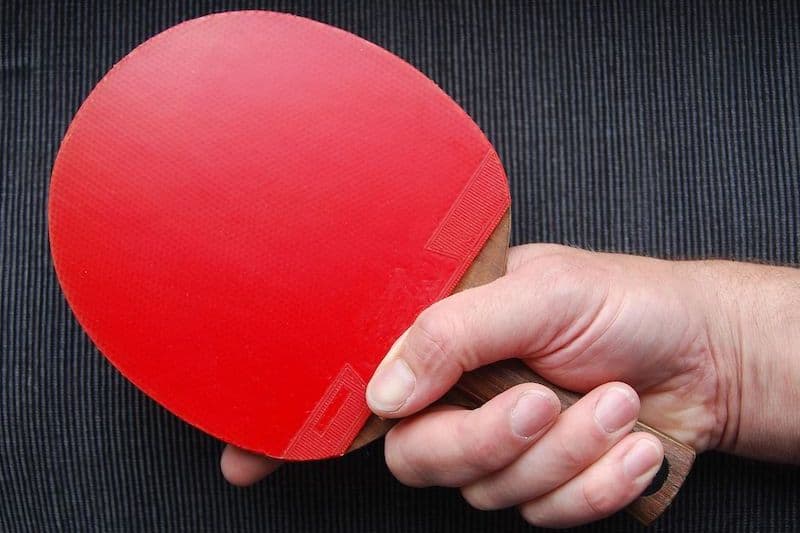
Grip shapes vary, but most beginners should start with the shakehand grip. A correct grip prevents bad habits that later limit spin, power, and consistency.
- Quick cue: hold the paddle firm enough that it does not twist, loose enough that your wrist stays mobile.
- Mini drill: bounce the ball on your paddle 50 times, then alternate forehand and backhand bounces.
More grip options and examples are in our guide on how to hold a table tennis racket.
3. Learn one legal serve and repeat it
The serve gives you full control over placement and spin, so it becomes one of the fastest ways to win more points as a beginner.
Start with one serve you can repeat. A short backspin serve is a strong default because it often forces a push return, which slows the rally and gives you more time.
Serve legality basics (beginner-friendly)
- Start with the ball resting on an open palm.
- Toss the ball upward so it rises at least 16 cm after leaving your palm.
- Keep the ball visible to the receiver throughout the serve, and do not hide it with your body or arm.
- Move your free arm away after the toss so it is not between the ball and the net.
- Mini drill: 30 legal tosses in a row, then 30 serves where the second bounce lands near the net.
- Mini drill: serve 10 balls short to backhand, 10 short to forehand, 10 long to elbow.
For a deeper walkthrough, see our guide on how to serve in table tennis and the official rules overview.
4. Master the core beginner strokes
Before you chase advanced shots, get reliable with a small set of strokes that show up in most points:
- Forehand drive (your basic topspin rally stroke)
- Backhand drive (your fast, compact rally stroke)
- Forehand push (your go-to response vs backspin)
- Backhand push (the most common beginner return stroke)
- Mini drill: 5 minutes forehand drive crosscourt, focus on smooth contact, not power.
- Mini drill: 5 minutes backhand push deep and low, aim for the last 12 inches of the table.
5. Warm up before you play
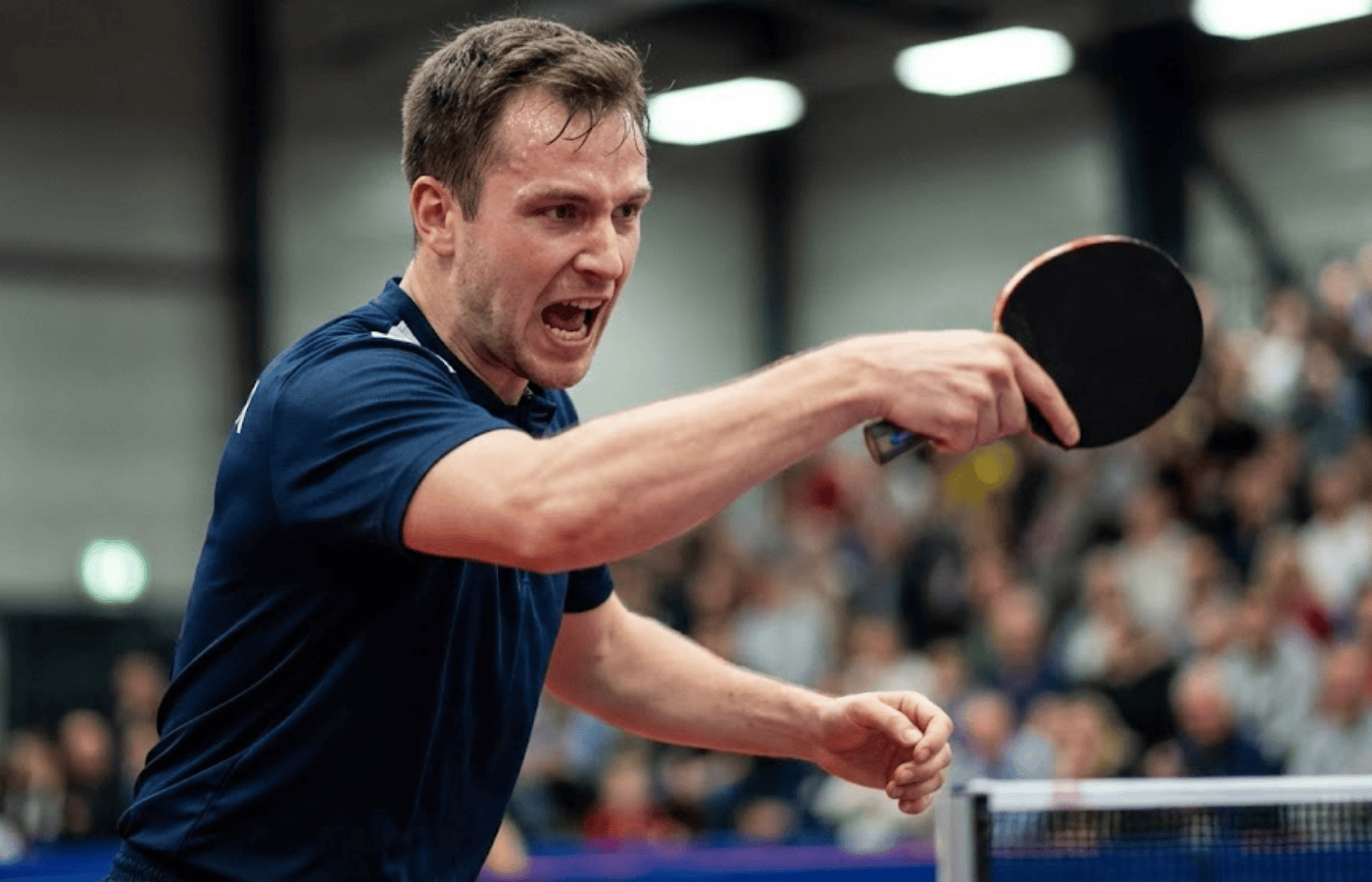
Table tennis looks casual until rallies speed up. Quick changes of direction and repeated reaching can lead to tweaks and nagging injuries, especially in the shoulder, elbow, and lower back.
- Warm-up idea: 2 minutes light side steps, 10 air swings forehand, 10 air swings backhand, 10 short split steps.
- Mini drill: shadow footwork to the forehand corner and back to center for 60 seconds.
For a full routine, see our guide to table tennis warm-ups and common table tennis injuries.
6. Build consistency before power
Unforced errors decide a lot of beginner matches. Under score pressure, many players swing harder and miss more. Your goal: a repeatable stroke that keeps the ball on the table.
- Mini drill: count how many shots you can rally crosscourt without missing, then try to beat that number next session.
- Match tip: treat every point as a single point, then reset your focus between points.
7. Practice on your own
Progress speeds up when you practice without relying on a partner. Solo training lets you repeat the same contact 100 times, which builds control and confidence.
- Mini drill: backhand push against a wall or return board, focus on a flat, controlled contact.
- Mini drill: playback mode forehand drive, aim for the same spot for 5 minutes.
Use this guide for ideas: how to practice table tennis alone.
Intermediate tips (level up)
8. Add serve variety with purpose
Once one serve is reliable, add variety that changes a return pattern. Focus on changing one variable at a time, spin, placement, or depth.
- Mini drill: 10 short backspin, 10 no-spin that looks the same, 10 long fast serves.
- Goal: create predictable returns you can attack on the next ball.
9. Consider a table tennis robot for structured reps

A robot accelerates improvement by feeding repeatable balls. It helps you build stroke confidence, then layer in footwork and placement goals.
- Mini drill: 5 minutes forehand drive vs topspin feed, then 5 minutes backhand push vs backspin feed.
- Mini drill: two-point footwork, one ball to backhand, one to forehand, repeat for 3 minutes.
If you want to compare options, see our guide to the best table tennis robots.
10. Work on low and deep returns
Two placement habits win points at intermediate level: keep returns low over the net, and push the ball deep so the opponent has less time and fewer angles.
- Mini drill: aim for the last 12 inches of the table on every push for 3 minutes.
- Mini drill: “net clearance” game, keep drives low enough that they clear the net by a small margin.
11. Join a club and play different styles
Clubs expose you to different spins, speeds, and tactics. That variety upgrades your reading skills and removes the shock of playing someone unfamiliar.
In the US, use USA Table Tennis’s club finder. In the UK, use Table Tennis England.
12. Improve your footwork with simple patterns
Better players punish poor positioning. Footwork keeps you balanced so your strokes stay repeatable under pace.
- Drill: side-to-side shuffle, touch forehand corner, return to center, touch backhand corner, repeat.
- Drill: two-step in and out, practice handling short balls and recovering.
If you train often, consider proper footwear designed for quick lateral movement. Here is our guide to table tennis shoes.
13. Identify weaknesses and keep pressure on them
Strong tactics feel simple. Spot a pattern, then repeat it until the opponent proves they can solve it. If their backhand collapses under pressure, keep it honest with consistent placement.
- Match tip: win points with safe patterns before attempting highlight shots.
14. Use deception, especially on serve
Deception works best when your motion stays consistent and the ball behavior changes. Serve deception usually comes from contact quality and subtle spin variation, not wild arm movement.
15. Learn to read your opponent’s serve
Serve return becomes easier when you watch contact and early ball flight. Look for cues that suggest backspin, topspin, or no-spin, then choose a simple return you trust.
- Return default: keep your first return safe and deep, then build aggression once you read the serve well.
Common mistakes that slow progress
- Gripping too tight and losing wrist control
- Standing upright and reaching instead of moving your feet
- Trying to smash early, before consistency exists
- Practicing random rallies without a goal or count
- Ignoring serve legality until a competitive match
A simple weekly practice plan
- Day 1: serve legality + short backspin serve reps (15 minutes) + backhand push (10 minutes)
- Day 2: forehand drive (10 minutes) + two-point footwork (10 minutes) + match games
- Day 3: serve variation (15 minutes) + serve return (10 minutes) + one focused match goal
Repeat weekly for 4 weeks, then adjust based on what causes the most missed points in real games.
FAQ
What grip should a beginner use?
Most beginners do well with the shakehand grip because it supports both forehand and backhand fundamentals and makes common strokes easier to learn.
What serve should I learn first?
A short backspin serve is a strong first serve because it often forces a push return and slows the rally so you can set up your next ball.
How often should I practice to improve fast?
Three to five short sessions per week usually beats one long session. Consistency builds timing and control faster than occasional marathon practice.
Do table tennis robots help beginners?
Robots help when you want repeatable reps for drives, pushes, and footwork patterns. They work best when you set one clear goal per session, such as deep placement or low net clearance.
Summing up
The biggest improvement comes from repeatable practice. Build one legal serve, two reliable strokes, and a simple weekly routine. Once rallies feel stable, add serve variety, footwork patterns, and smarter match tactics.
If you have your own favorite beginner drills, share them in the comments so other readers can try them.

Eugene (Gene) Sandoval has been one of those guys who spent too many hours around ping pong tables in high school. However, soon enough, Gene understood that there is more to ping pong than having fun. That is how he started a journey that made Eugene one of the experienced semi-professional ping pong players in the United States. As the founder of the PingPongRuler, Eugene spends most of his time surrounded by ping pong tables and research. He always has this knack for coming up with new ping pong strategies and telling the good and bad equipment apart.