

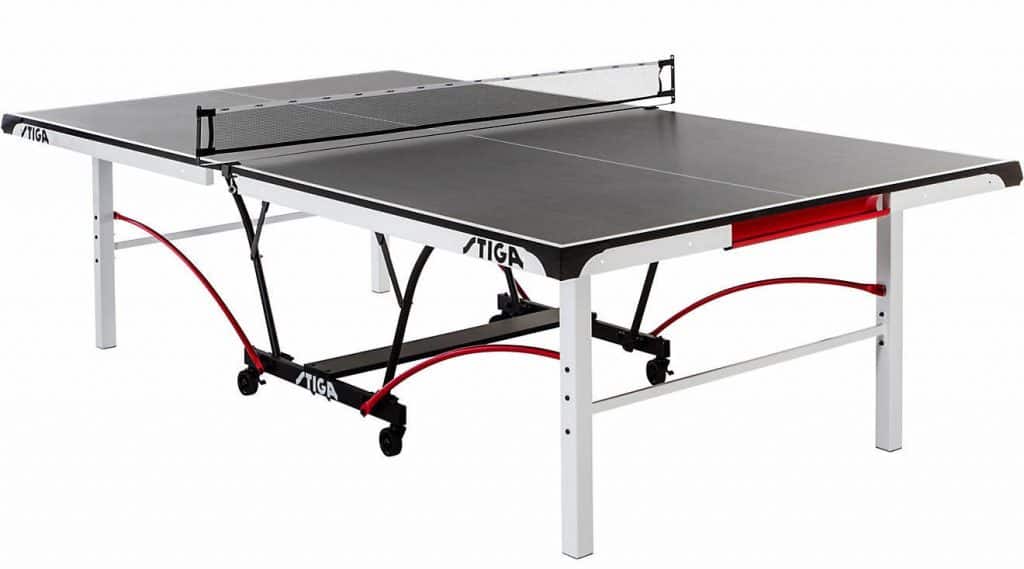
The STIGA Master Series ST3100 has been a popular mid-range indoor table for home players who want better bounce than entry-level tables, plus convenient features like playback mode and built-in ball storage.
In 2026, the bigger story is availability. The ST3100 shows as out of stock on STIGA’s site, and many retailers list it as discontinued or difficult to find new.
This review still matters if you are buying used, picking up old inventory, or comparing it to the ST4100 and newer “QuickPlay” style tables that assemble faster.
Quick verdict: the ST3100 offers strong value for beginner to intermediate home play, especially if you care about sturdiness and storage. Assembly takes time, and the included net system feels basic compared with higher-end models.
2026 update: The ST3100 is hard to find new. If you want a current, easy-to-buy replacement, skip to the “Recommended alternatives” section below. Or check out the “Advantage” line, available in four different sizes.
Who this table fits best
- Families and rec rooms that want a sturdy, regulation-size indoor table.
- Beginner to intermediate players who want a more consistent bounce than thin-top budget tables.
- Homes that need playback mode for solo practice and full fold-up storage.
Who should skip it
- Anyone who wants fast assembly and minimal parts.
- Players who want a tournament-style 25mm, 1-inch tabletop bounce.
- Buyers who frequently host serious matches and want a higher-end net system out of the box.
Ratings
| Category | Rating |
|---|---|
| Playing surface | 3.5 / 5 |
| Build quality | 3.5 / 5 |
| Value | 4 / 5 |
| Extras | 4 / 5 |
| Overall | 4 / 5 |
STIGA ST3100 overview
The ST3100 sits in a sweet spot for home use. The tabletop thickness lands around 19mm, and you will see it marketed as 20mm in some places. That thickness supports a noticeably better bounce than many starter tables, especially for basic topspin rallies and consistency drills.
It also gets a few quality-of-life details right, including playback mode, full fold-up storage, 3-inch casters, and an integrated ball storage apron. Those features sound small until you start using the table weekly.
Space planning before you buy
- Table footprint: 9 ft x 5 ft (regulation).
- Minimum workable clearance for casual play: about 3 to 5 ft behind each end, and 2 to 3 ft on each side.
- Comfortable clearance for real rallies: about 6 to 8 ft behind each end, and 4 to 5 ft on each side.
If your room feels tight, the biggest practical win comes from playback mode and full fold-up storage, which lets you reclaim the space between sessions.
Specifications (ST3100)
| Tabletop | ~19mm, marketed as 20mm |
|---|---|
| Ball storage | Integrated apron, 12 balls per side (24 total), balls not included |
| Casters | 3-inch |
| Apron | 2-inch |
| Legs | 2-inch |
| Play position | 108 in x 60 in x 30 in |
| Storage position | 60 in x 30 in x 62 in |
| Playback position | 60 in x 68 in x 62 in |
| Weight | 195 lb |
| In the box | Net and post system included, paddles and balls sold separately |
Assembly
Assembly is the biggest drawback. Many newer tables arrive mostly assembled, while the ST3100 tends to take about 2 to 4 hours depending on how quickly you work, and whether you have a second person helping.
The good news, the official instructions are clear. Take your time, lay out all parts first, and avoid overtightening bolts until everything lines up.
View the ST3100 assembly instructions (PDF)
Feature breakdown
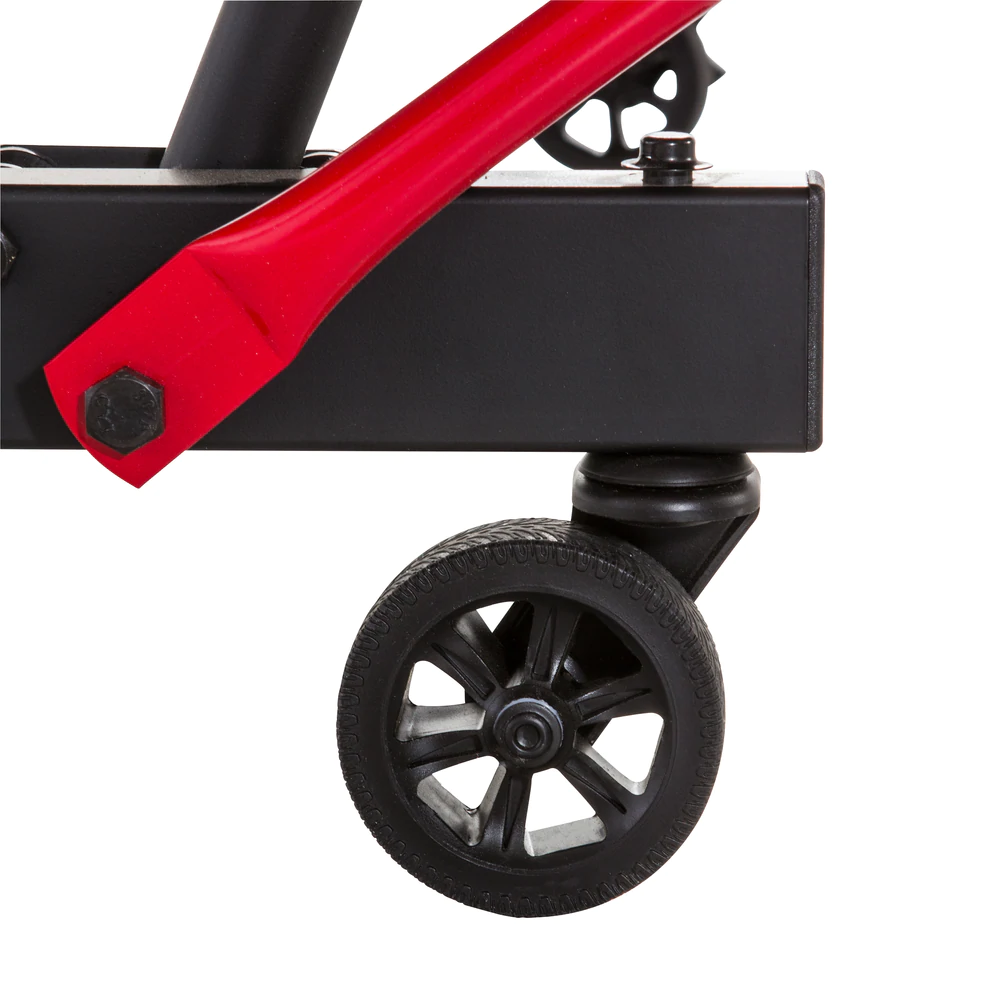
Large wheels
The ST3100 uses 3-inch casters, which helps on carpet and slightly uneven flooring. Lock the wheels once positioned, and the table stays planted during play.
Sturdy, well-engineered frame
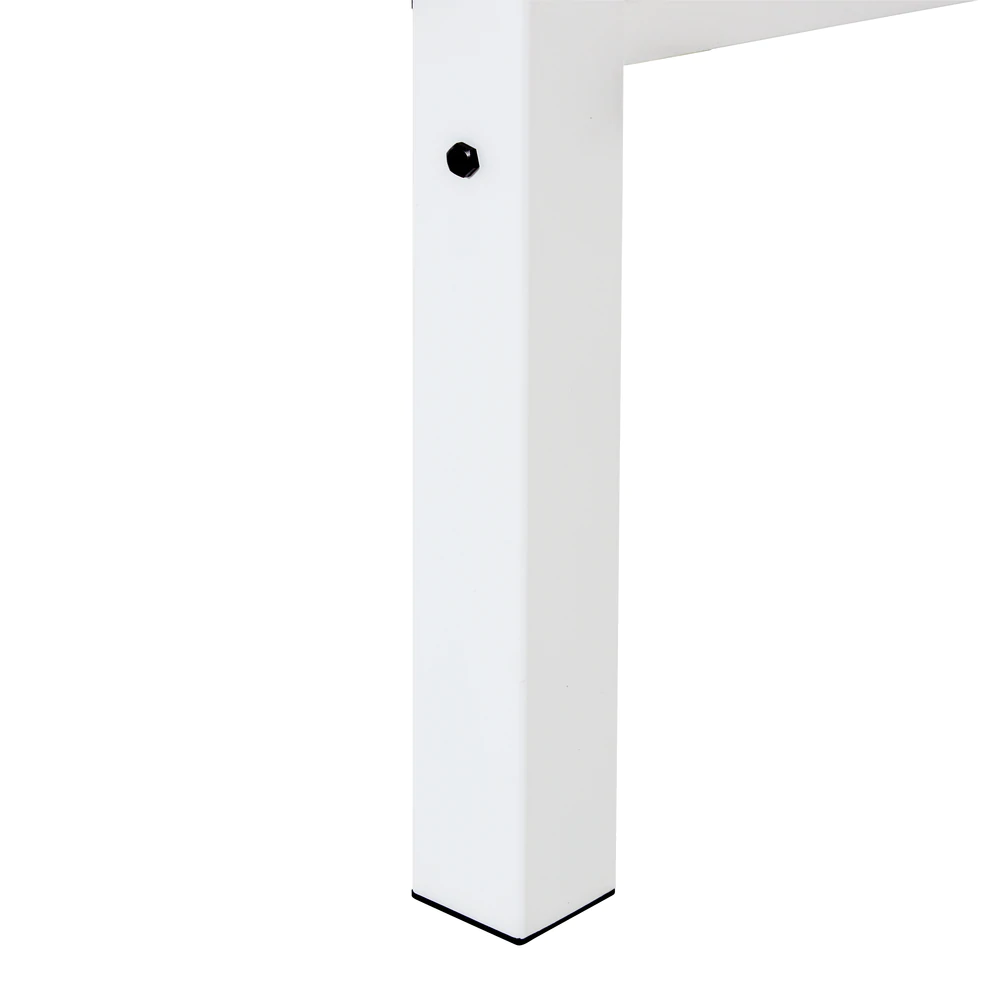
The undercarriage locks together well and gives the table a stable, rigid feel once built. The 2-inch legs provide good support, and accidental bumps rarely shift the table when the wheels are locked.
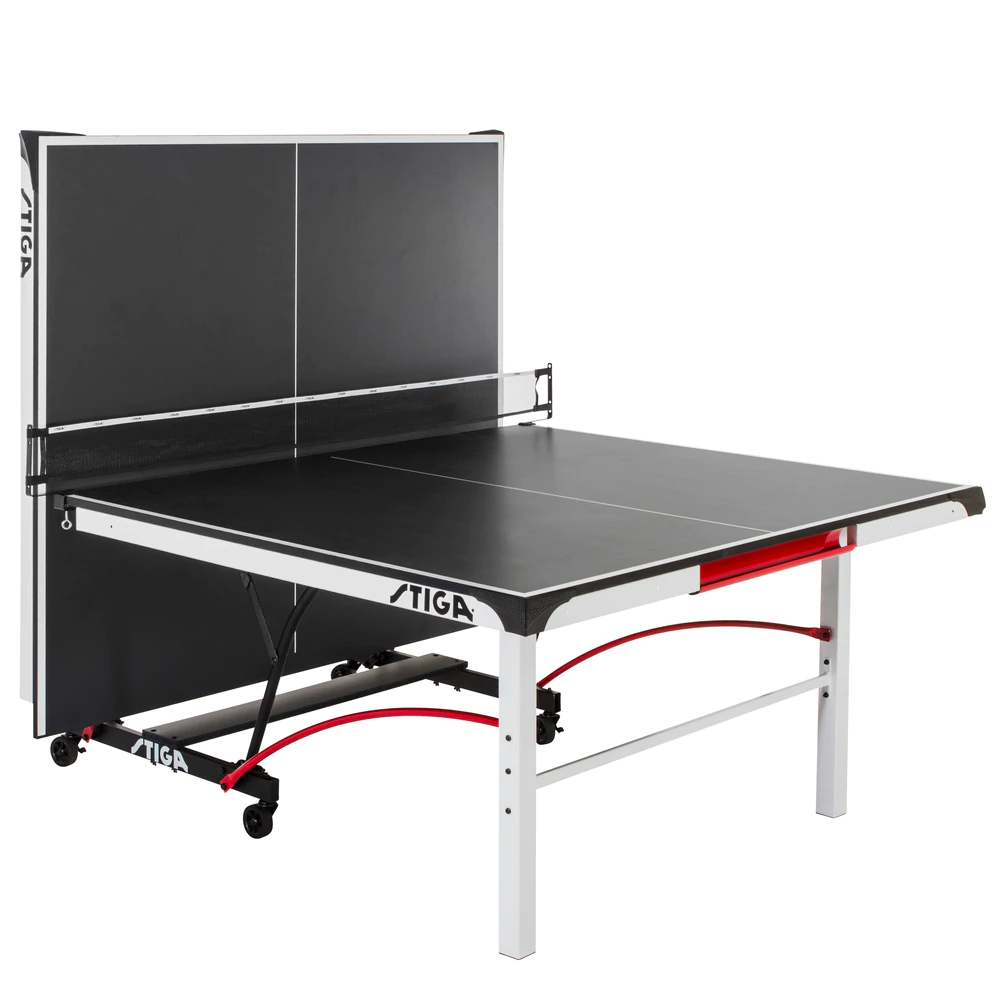
Single-player option (playback mode)
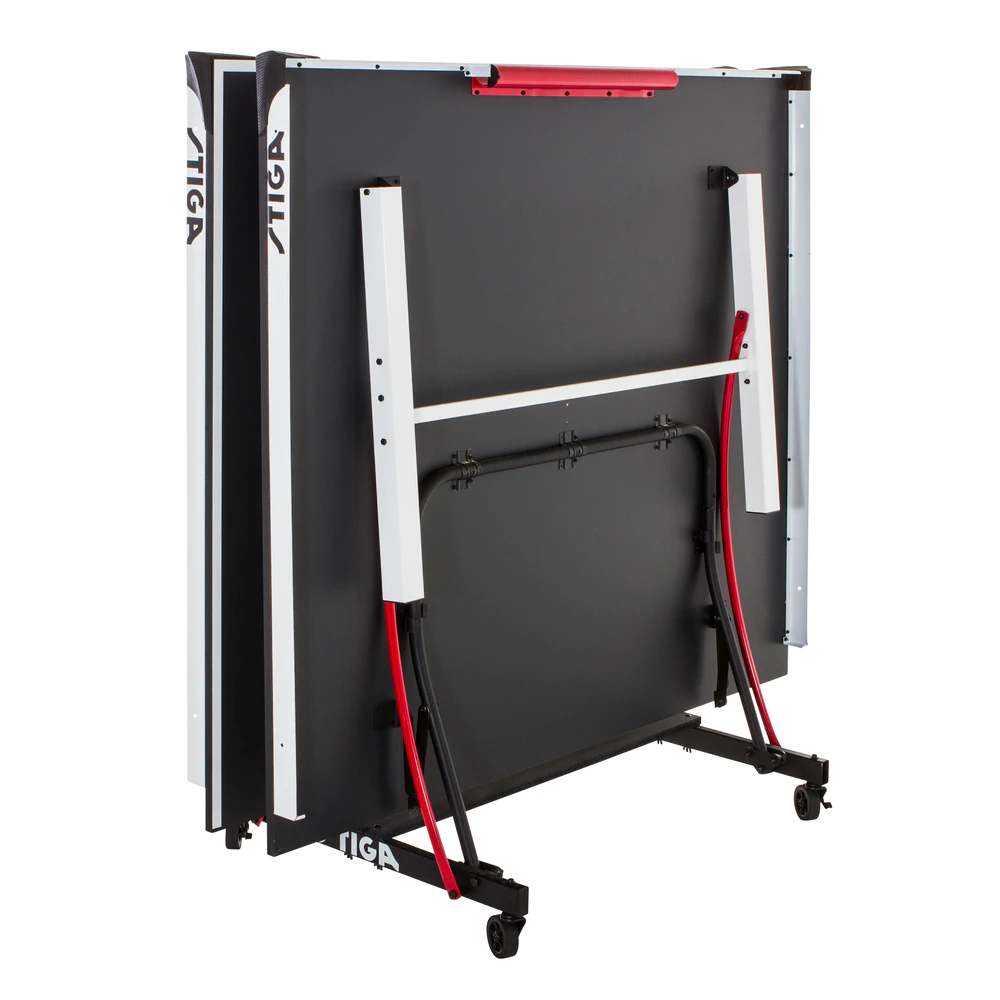
Playback mode lets you fold up one half for solo practice. For beginners, this helps with hand-eye coordination, serve returns, and basic consistency work.
Folds up for storage
The table folds fully for storage, and it rolls away easily. One important detail, the ST3100 stores as one piece, the halves do not separate. That design can feel heavier to maneuver in tight hallways or around furniture.
Ball storage apron
The built-in ball storage apron holds 12 balls per side, 24 total. For practice sessions, especially with playback mode, this keeps the flow going without constant ball retrieval.
Pros and cons
Pros
- Integrated ball storage, higher capacity than many home tables
- Sturdy legs and a stable frame once assembled
- Playback mode for solo practice
- Folds up for storage
- 3-inch casters roll well on carpet
Cons
- Assembly takes time, many parts
- Net and post system feels basic compared with higher-end options
- Paddles and balls sold separately
- Some buyers prefer a more premium, all-black frame aesthetic
FAQs
STIGA ST3100 vs ST4100, what changes in real use?
The ST4100 moves up to a 1-inch, 25mm tabletop, and that usually means a more consistent, livelier bounce with fewer dead spots during faster rallies. It also tends to include a higher-end net system and larger casters. The trade-off comes in cost and bulk.
How much does the ST3100 weigh?
About 195 lb. The wheels help, but moving it around tight corners and through narrow doorways often feels easier with two people.
Do I need a thicker tabletop for home play?
Many homes do fine with 16mm to 19mm, especially for casual games and beginner training. Players who want a more tournament-like bounce often prefer 25mm, 1-inch tabletops.
Should I upgrade anything right away?
If you play often, upgrading the net set and buying a few dozen quality training balls usually delivers the biggest quality-of-life improvement for the money.
Conclusion
The STIGA ST3100 remains a strong home table for beginner to intermediate players, especially for families who want a stable regulation-size setup with playback mode and ball storage. In 2026, the challenge comes from availability, so most buyers will do better choosing a current model that ships easily and assembles faster.
Recommended alternatives (2026)
Best “buy it new right now” pick: STIGA Advantage
The STIGA Advantage fits many of the same home use cases with a simpler ownership experience. It arrives 95% preassembled, and setup often takes around 10 minutes. The trade-off comes from a thinner tabletop, which affects bounce compared with thicker competition-style surfaces.
Best upgrade for serious bounce: STIGA ST4100
If you want the tournament-style playing surface, the ST4100’s 25mm, 1-inch top tends to deliver the biggest jump in bounce quality compared with mid-range home tables. It also typically includes an upgraded net system and larger casters.
If you already know you want a 25mm tabletop, this upgrade usually makes more sense than chasing old ST3100 inventory.
If you find one used: STIGA ST3600
The ST3600 often shows up as discontinued, but it still appears on the secondary market and in occasional leftover inventory. It offers quick assembly and separated table halves for easier moving and storage. The tabletop runs thinner than the ST3100, so it leans more beginner-friendly.
Budget Alternative: JOOLA
The off-brand version is this table from JOOLA. The price difference is minimal, but it may be an alternative for those looking to save a little.

Eugene (Gene) Sandoval has been one of those guys who spent too many hours around ping pong tables in high school. However, soon enough, Gene understood that there is more to ping pong than having fun. That is how he started a journey that made Eugene one of the experienced semi-professional ping pong players in the United States. As the founder of the PingPongRuler, Eugene spends most of his time surrounded by ping pong tables and research. He always has this knack for coming up with new ping pong strategies and telling the good and bad equipment apart.